



Following the events of September 11, the Environmental Protection Agency mandated that water companies perform vulnerability assessments for their facilities. Upon completing the assessment, Erie Water Works developed a multiyear investment plan to enhance security at its facilities. The plan aimed to upgrade access control systems and existing intrusion systems and to add video surveillance to its two primary facilities where water is stored and processed, as well as to other facilities.
Echo, Inc. recently expanded its facilities and locations to fulfill the demands of a growing market. Its two locations now cover more than 35 acres with facilities that span a total of 540,000 square feet. The company was in need of a cost-effective, convenient and easy to use solution that would enhance the security of these two, independently-operated facilities. Echo also desired a solution that would integrate access control and intrusion detection capabilities.
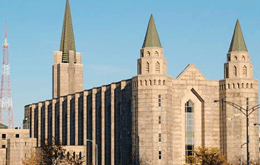
Established in 1852 in the City of Quebec, Canada, Université Laval was the first French-speaking University in North America. In 1950, construction began on its main campus in Sainte-Foy, which was then on the outskirts of the city. It has grown into what is now referred to as a city within a city.
The university’s statistics are impressive: the 300-acre campus has over 32 buildings, which are linked by 10 kilometers of underground pedestrian and service tunnels designed to cope with harsh Canadian winters. The Université Laval hosts a sizeable community of approximately 44,000 students and 8,000 employees within an urban/rural setting of dense woods, grasslands and sports fi elds covering more than half the campus.
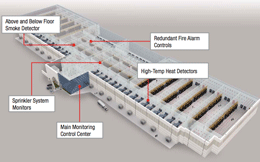
There are 152 Veterans Affairs (VA) hospitals across the country. At three of those hospitals — the Albany Stratton VA Medical Center in New York, the Grand Junction VA Medical Center in Colorado and the Dallas VA Medical Center in Texas—NOTIFIER fire alarm and emergency communications systems are keeping vets safe when they seek care. All three sites made fire protection upgrades to be expanded across future facility additions.
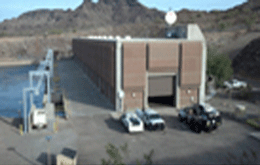
Water is one of Arizona’s most precious resources and the Colorado River satisfies much of the demand. The 336-mile-long Central Arizona Project (CAP) aqueduct annually delivers approximately 1.6 million acre-feet of Colorado River Water to cities, Indian Tribes and Farms in Central and Southern Arizona. The CAP consists of 15 pumping plants that lift the water approximately 2,400 feet from the Colorado River to south of Tucson.

